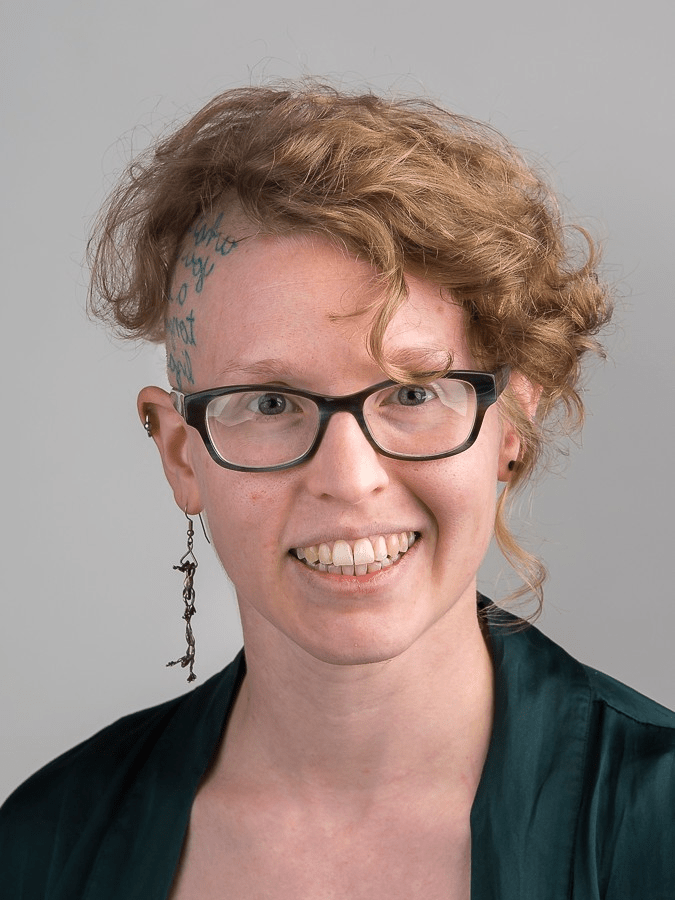
“Abi creates a welcoming environment where students feel more at ease to engage and speak their minds.”
“Abi’s teaching style exemplifies the progress our current post-secondary education system needs. Their interdisciplinary approach to lessons allowed me as student to develop comprehension beyond the scope of the lecture and foster interest in the real-world research behind it. Most importantly for students like me, Abi reaches many of the learning styles not supported by traditional university level teaching.”
“I’m really bad at making official statements like this but… Abi’s a great teacher, don’t let her talents go to waste.”
–Student testimonials, Spring 2021
Teaching Experience
Click each entry below to expand teaching history:
Sessional Instructor: Introductory Biology BIOL100, Alexander College 2023-Present
Winter, Spring, Fall 2023, Winter 2024
Department of Science, Supervisor: Kelly Cheung
Teaching skills
- Design a semester long course that achieves specific articulation goals.
- Run 3- or 4-hour lectures for multiple sections of the same course, in person or on-line.
- Develop and modify weekly handouts and study materials.
- Design and run learning activities conducted independently and in small groups.
- Design and run weekly 3- or 4- hour labs that provide concrete connections between course material and lived experience and complement weekly learning goals.
- Guide student learning and support teaching staff in weekly teaching labs.
- Predict and obtain supplies needed to successfully run labs.
- Flexibly alter lab content in response to dynamic student needs.
- Schedule and maintain regular office hours and review sessions.
- Design, write, and grade a wide variety of exams and papers.
- Student reprimand and communication around academic alerts
Class description:
Alexander College (AC) is a young transfer college that prepares new immigrants for an academic future in BC. BIOL100 is an extensive survey course intended to equip students with all the biological knowledge normally imparted through the Canadian Highschool system. It is one of the three options for students to fulfill their lab requirement in the transfer degree. I have been teaching two sections at a time, each with a maximum of 38 students further split into two lab sections.
Topics covered:
- Basic biochemistry,
- Cell structure and function,
- Enzyme function, cell metabolism,
- DNA replication and the flow of genetic information,
- Principals of evolution and coevolution in the context of ecological niches,
- Nutrient cycling and flow, including food webs,
- Phylogenetics and the evolutionary history and diversity of living organisms,
- Diverse lab skills including:
- Use of lab equipment including microscopes, pipettes, forceps and scalpers,Collect samples and prepare slides,Find and cite reliable scientific sources,
- Create and understand tables, graphs, and diagrams.
Skills learned:
I have had the pleasure of working with a team of more experienced instructors to reimagine the BIOL100 course away from more traditional detail-focused declarative learning goals and toward more skill-based and experiential learning goals. I have been given incredible independence to develop my own lectures, activities and assignments. I am particularly proud of my essay assignment where students make their own family pedigree following a genetic trait in their family, and then apply course principles to explain their trait.
The majority of my students so far have been from Punjab, India. Most have rural and agricultural backgrounds and have never taken a science class before. It has been a privilege to teach these students basic biology and witness their discovery of concepts I don’t remember learning (Ex: plants are alive, blood carries oxygen and nutrients around your body, butterflies are more closely related to ants then they are to birds, Traits we develop through practice and experience cannot be passed to our children, and so many more!). This past year has been the most challenging and most rewarding year of my life.
Along with a lack of any scientific background knowledge, many students also lack basic technological literacy. Some have never had an email address before, and most entirely believe everything they read online. They also tend to assume that “working together” on an assignment means copying the work of the brightest student in the group and they are deeply confused by the concept of plagiarism. This has pushed me and many other instructors at AC to explicitly teach western copyright norms to our students. I have also gained extensive experience speaking with and reprimanding students who have copied, plagiarised, and used AI to complete assignments. I have also written many academic alerts.
Each class has a different culture and I develop new skills each semester in order to manage the classroom while retaining their respect and trust. One tool I have retained and further developed from the TA days is using decorative stickers are rewards for brave questions and deep thinking. I was invited to give a presentation on this topic to my colleagues at the Winter 2024 Professional Development Day. It was an honor to speak to fellow instructors from all departments about using positive reinforcement to support active learning.
Teaching Assistant: SFU Biology Department, 2016-Present
Teaching skills
- Run 50-minute tutorials for multiple tutorial groups, in person or on-line.
- Develop or modify weekly handouts and study materials.
- Design and run activities and projects conducted independently and in small groups.
- Guide student learning and support teaching staff in weekly teaching labs.
- Schedule and maintain regular office hours and review sessions.
- Grade a wide variety of exams and papers.
- Confidence in using: Canvas, Crowdmark, Zoom, Google Documents, and more.
- Youtube channel: https://www.youtube.com/channel/UC5L7z1N3mYJMcBNl9iQx5Qw
General Organismal Biology BISC101, SFU
Fall 2022 [In person] Professor: Ivona Mladenovic
Summer 2022 [In person] Professor: Megan Barker
Topics covered:
- Cell structure and function,
- DNA replication and the flow of genetic information,
- Enzyme function, cell metabolism and physiology of microorganisms,
- Plants and animal anatomy, form and function
This large introductory lab course was recently redesigned into a flipped classroom format, with new labs and new projects. Many aspects were still in states of transition, especially the written lab materials. In the summer I had the opportunity to work closely with D. baker to redesign and grade a large group written assignment, incorporating extensive formative feedback on a large scale. In the Fall I was the only experienced TA and enjoyed training and mentoring my two fellow TAs as we developed activities and handouts together.
Across the two consecutive semesters that I TAed this course, teaching teams faced students with acute mental health emergencies, severe anxiety, cheating, and violent interpersonal altercations. I was able to provide support and resources to the students affected, and advocate for their needs. Counseling students through difficult situations is the most rewarding part of my job.
Skills learned:
- Student experimental research project: development, grading, and feedback
- TA training and mentorship
- Flexible problem solving in the teaching lab
- Student support and mentorship through conflict and trauma
Genetic Analysis BISC302W, SFU
Spring 2022 [Hybrid] Professor: Kathleen Fitzpatrick
Topics covered:
- The anatomy and function of genes and chromosomes
- Chromosomal defects and pedigree analysis
- Techniques for genetic analysis in variety of organisms
- Scientific writing composition
This in-depth laboratory course exposes students to many aspects of genetic research and emphasizes the value of succinct and informative scientific writing. I worked closely with Prof. Fitzpatrick and the other TAs in both grading and running labs. I was inspired by the design of this courses’ lab element, which incorporates real research and results with hands on genetic and phenotypic analysis. See my YouTube channel for videos of my review sessions.
I am deeply proud of the support I was able to provide students freshly returning to in-person labs, and the connections I made with those students. In my SurveyMonkey for this course I solicited “testimonials”that were explicitly to be included in application documents. Selections from these are included in Appendix 4, and at the beginning of this resume.
Skills learned:
- Lab report and essay grading: both formative and summative feedback
- Asynchronous video lectures to supplement flipped classroom learning.
- Targeted student support to overcome lack of underlying knowledge
Developmental Neuroscience BISC423, SFU
Spring 2021 [on-line] Professor: Harald Hutter
Topics covered:
- Molecular and genetic basis of neuronal development
- Specification of neurons in the early embryo
- Formation and maturation of neuronal circuits
- Neuronal development in invertebrate and vertebrate model organisms
On-line course with flipped classroom structure. Dr. Hutter recorded lecture videos and I ran synchronous tutorials discussing and clarifying course content. Emphasis was placed on using new vocabulary to gain deep understanding of complex processes. Dr. Hutter and I worked closely when developing the exam material and answer keys.
I received two unsolicited emails of gratitude during the course of this class. Both are included with permission in Appendix 4. This was the first semester I used SurveyMonkey to solicit student feedback. Students generally liked google docs and video recordings of tutorials and office hours. They didn’t like required Canvas discussion group participation.
Skills learned:
- Synchronous Zoom and google classroom management
- Exam question development
- SurveyMonkey quiz and survey development
General Evolutionary Biology BISC102, SFU
Spring 2019 [In person] Professors: Onkar Bains; Erin Barley (lab)
Summer 2019 [In person] Professor: Erin Barley
Topics covered:
- Basic genetics and taxonomy
- Basic animal and plant development and evolution, with emphasis on the relationship between form and function
- Introduction to the ecological relationships between organisms and their environments
In this large and well-established introductory biology course I found myself mentoring as much as I was teaching. I developed new ways to support students still learning how to learn, and I reveled in the opportunity to teach concepts I find basic to students who had never explored the outdoors before. I also enjoyed mentoring new TAs and collaborating with other experienced ones, developing sustained friendships.
Skills learned:
- Teaching lab assistance
- TA mentorship
- Recipient of 2020 Faculty of Science Graduate Student Excellence in Teaching Award
Introductory Genetics BISC202, SFU
Spring 2020 [Hybrid] Professor: Kevin Lam
Summer 2018 [In person] Sessional: Mika Mokkonen
Fall 2017 [In person] Professor: Esther Verheyen
Topics covered:
- Genetic linkage and mapping in a variety of model organisms
- Gene function and regulation, from operons to genetic pathways
- Teaser of population genetics and epigenetics.
This course is near and dear to my heart. In Fall 2017, Prof. Verheyen allowed her TAs great room for creativity and flexibility. This helped me develop confidence and independence in my teaching. In the summer of 2018, I developed my Vocabulary Project, which I have used frequently since. Examples are included in Appendix 3. Spring 2020 was interrupted by the COVID-19 pandemic, and we were forced to transition to online learning midway through the course with no warning, forcing the teaching team to be flexible and learn new skills. Bisc 102 was the crucible that made me a good teacher and I will always remember what it taught me.
Skills learned:
- Student project development
- Tutorial curriculum development
- Substitute lecturing of previously developed content
- Using Canvas discussion board to stimulate conversation and solicit student feedback
- Video editing and YouTube upload
Current Topics in Cell Biology BISC403: Protein Trafficking in Polarized Cells, SFU Fall 2016 [In person] Professor: Michael Silverman
Topics covered:
- Biosynthetic pathway and protein are targeting
- Roll of protein trafficking in cellular function, organismal physiology, and health
- Examples of protein trafficking diseases
In this course, tutorials were entirely devoted to the development and assessment of group PowerPoint presentations. I coached students in basic science communication skills and provided mentorship to third- and fourth-year students.
Skills learned:
- Grading essay-format tests
- Helping students design and present short and informative PowerPoint presentations
- Grading students on knowledge and presentation skills
Developmental Biology BISC333, SFU
Spring 2016 [In person] Professor: Harald Hutter
Topics covered:
- Cell fate specification
- Cell migration and morphogenetic events
- Cell differentiation
- Organogenesis
- Discuss plant, invertebrate, and vertebrate model organisms
This was my first teaching experience and Dr. Hutter was very supportive and encouraging. The tutorial format he showed me still informs the way I design my lesson plans, focussing on open ended and creative questions that require the use of key vocabulary.
Skills learned:
- Classroom management
- Schedule and run review sessions for students
Guest Lecturing
Lecturing skills
- Develop 10- to 50-minute lectures about a specific topic
- Present topic clearly to a lecture hall, asking and answering questions flexibly
- Compose relevant exam questions for course instructor.
January 2024 Professional Development day, Alexander College
“You’re wrong and I love it! Using positive reinforcement to train deep thinking”
I was invited by Lindsey bat Joseph, Associate Dean of Arts and Sciences, to give a 10-minute presentation on my use of stickers to motivate students to participate more actively in lectures.
March 2022 Neurodevelopment, Quest University
I was invited by a C. elegans colleague to guest lecture in her upper-level neurodevelopment course over Zoom, with the following learning objectives: 1) students reflecting on the strengths and weaknesses of nematodes as an animal model for neurodevelopmental research and 2) students gaining an understanding of a career path in research and a graduate school experience.
“Abigail’s guest lecture had Abigail’s engaging and encouraging teaching style created a space for my students to feel comfortable asking questions and fostered a discussion-style learning environment. Abigail described the scientific concepts of their research in a way that was accessible to undergraduate students, using metaphors and examples to help students understand the material. Overall, I found that Abigail’s interactive teaching style contributed to my students’ engagement, and they greatly enjoyed their guest lecture.”
Riley St Clair, PhD
Professor of Life Sciences, Quest University
Spring 2020 Developmental Biology BISC333, SFU
“Guidance of Pioneer axons: AVG”
Updated version of 2019 presentation, with clicker questions incorporated. This presentation occurred during the Spring 2020 COVID-19 quarantine and was provided to students asynchronously, as a YouTube video: https://youtu.be/GwjJrfdKGrM.
Summer 2020 General Biology BISC102, SFU
“Evolution of the Brain”
Introductory level explanation of the evolutionary origins of neural circuits, with emphasis on non-associative learning in Aplasia.
Spring 2019 Developmental Biology BISC333, SFU
“Guidance of Pioneer axons: AVG”
Introductory level explanation of the evolutionary origins of neural circuits, with emphasis on non-associative learning in Aplasia.
Education
2015-2023
Simon Fraser University, Burnaby, BC.
Ph.D. in Biology, Dept. of Biological Sciences
2010-2013
University of British Columbia, Vancouver, BC
M.Sc. in Neuroscience, Dept. of Psychiatry
2006-2010
Oberlin College, Oberlin, OH
B.A. in Neuroscience, High Honors
Teaching Certification
Fall 2019
Certificate Program in University Teaching and Learning
Semester long course in course design and lesson planning
April 2018
ISW: Simon Fraser University Teaching and Learning Center
3-day Instructional Skills Workshop
Awards
2020
Faculty of Science Graduate Student Excellence in Teaching Award
Simon Fraser University, Faculty of Science
2010
Nancy Robell Prize in Neuroscience, undergraduate research award
Oberlin College, Neuroscience Department
 Abigail Feresten, Ph.D.